
Squarely in the "Other interesting topics" category for this site, I can tie all this summer fun back to hacking a little bit. This is about improvising a little bit to solve a problem. It's also about trade-offs, fire, and building stuff in a cheap and hackish nature. So there. With that out of the way, this post will have almost nothing to do with technology.
I love camping, and usually when I go camping with family and friends, it's the all-out party at the lake kind of camping, just short of sleeping in an RV. I can tether my LG Chocolate to my MacBook, plug in my La Fonera running Jasager to mess with WiFi-toting campers, keep everything charged with the inverter and still start fires for the sake of fire -- because God knows you don't need a bonfire to cook when you have a nice propane stove hooked up to a 20-pound gas-grill propane tank! Sights like this one (from Memorial Day Weekend) aren't uncommon:
More recently, though, I've tried to get myself back into a more stripped-down backpacking mode. It's no secret that I like riding my bicycle for basic transportation. It also happens that there are decent campgrounds close enough to home for me to ride my bicycle to. For an adventure like this, the goal is to pack light (kind of like backpacking) -- In fact, the weekend after the above photo was taken, I snapped this -- which should give you some idea of how much crap I had to haul for a one-night "backpacking" adventure on my bicycle:
This is a 17-ounce (or so) propane tank and my small propane burner which I brought along on my last trip. It's definitely better than the 30-pound rig we were using a week prior. The bonus is that it still boils water in well under 5 minutes and makes fried eggs for breakfast like an ace.
I have a similar trip coming up in about 3 weeks, and over the past few days, I've been contemplating various ways to minimize the bulk. The wretched camp stove above is pretty much the only thing I can downsize cheaply. Sure, I could ditch some of my older, heavier gear and buy a $60 camp pad and a $250 tent -- No thanks. I'm on a budget, and that kind of money would be better spent on say... plane tickets to DefCon?
I decided to try going the sterno route. We have a can of it laying around, so what could it hurt? The main problems with sterno are that it doesn't get as hot as propane, and that the can itself won't support your cookware. I had some old bicycle spokes laying around and made this little contraption. It's two spokes (of different lengths) bent up and strapped together with tape on one edge. It folds nicely, but not totally flat. If I had spokes of the same length (or if I just cut the longer one, or wasn't afraid of bending the longer one so it is directly in the flame's path) it would fold flat.
I bent this so that it would hold the cookware about 1" above the fuel canister. It's so simple that I really don't think you need a full set of instructions to replicate what I did here. You can cut and re-bend a wire hanger, get some thick solid-core copper wire, or improvise whatever you want. Three level points are all you need to support a kettle over the heat source
With the sterno can in place -- and set up on a piece of my mess kit so I don't melt the counter and incite the wrath of my l33t wife -- it looks like this:
Now for the sucky part: In order to boil two cups of water (for example, to make French Pressed Coffee or re-constitute a freeze-dried backpacking meal), it takes between 10-15 minutes depending on conditions, and yes I had the lid on whilst attempting to bring this water to a boil.
One cool thing, though, is that this stove stand will work nice with many other kinds of improvised heat sources. I may just end up replacing the sterno can with a beer-can alcohol stove. That's another project for another evening, though.
2009-07-08
Improvised backpacking stove


2009-07-06
Annual gathering of pyromaniacs
As usual, The HiR crew participated in massive amount of explosives and fire for Independence Day. While we didn't have professional-grade stuff like last year, we all actually got to set off a bunch of smaller things. And I mean a bunch.
Frogman is actually made of explosives. :)
A few repeater cakes (pre-fused multi-shot aerial displays) staged in the yard.
Frogman, Dicegrrl and Asmodian X setting up a few bottle rockets.
This made me laugh, particuarly seeing Frogman cheer as the projectile launched. I made it from a sequence of images taken with an intervalometer script on my camera (thanks to CHDK)
Dicegrrl shows off her Twitter Glitter. By the way, this was just about the most underwhelming piece of the night, aside from one ironically called "The Migraine". Both of them were basically a 4-shot roman candle. At least Twitter Glitter could be described in 140 characters or less.
Crackle.
Boom.


2008-10-28
The Geek 100 Pt. 1: Possessions and Lifestyle Skills
See the whole series: The Geek 100
This is a list of 100 basic things and skills every geek should have. I've broken this series up into five parts. Let's face it: a list of 100 things would be tedious to wade through. Over the rest of the week, look for twenty more skills to show up daily. I've listed possessions first. The rest of the series focuses on skills and knowledge. The skills assume you have done it in the past and can remember how to do it right now (or, like a good Geek, you've jotted it down in one of your notebooks). Having it in your personal notebook is okay. Scrambling to the Internet means you don't have the skill. Yet...
This is just a fun, arbitrary list I came up with mostly on my own but with some help just in case I was missing any skills I didn't even know I was missing. I'll give credit where due. Don't think I just took 100 things about myself and built up a geek paradigm from it. Most likely, you won't have all of these. I know I don't. The lucky ones will have a good chunk of these covered, though.
Possessions. Every geek should have:
- A citizen-band radio
- A computer that's incapable of running MS-DOS 6.0 natively
- A graphing calculator
- A notebook of tricks, tips, and things you don't want to forget how to do
- A weapon that fires (relatively) harmless foam projectiles
- An HTTP proxy
- Action figures
- An acoustic coupler, TDD, or acoustic modem
- An obsolete video game console
- Off-site backup storage
Lifestyle Skills. Every geek should be able to:
- Convincingly perform a magic trick or card trick
- Brew French-pressed coffee
- Play a musical instrument
- Point out discrepancies in movies that feature "hacking"
- Recite a significant number of lines from at least one Anime movie
- Scam free drinks from noobs at the bar (or at the lemonade stand if you're <21)>
- Social engineer your way out of trouble
- Speak a foreign language
- Start a large, powerful bonfire
- Use wordplay
2008-02-23
Fire: Improvised fire starter and tripwire
- If waxed, these igniters are immune to temporary exposure to water splashes and rain.
- They start things on fire quickly.
- The intense flame is resistant to high winds while the igniter material is burning.
- In many situations, they burn for more than 10 seconds after the match heads finish.
- They're inexpensive to make.
- Start kindling quickly to build a fire for warmth, light, or cooking.
- Use as a bright, temporary flare signal in the dark.
- A trip-wire igniter with a fuse and road flare can to alert you to and illuminate intruders
- A remote pull trigger can be used to activate a fire (pile of leaves, flammable substances) as a distraction for egress or ambush.
- Use as an improvised remote trigger where distance from the fuse or fire is desirable.
- I'm sure plenty others come to mind.
- Scissors or knife
- Some kind of tape
- A book of matches
- Paraffin wax or candles you can melt
- Small tin can
- Cooking pot
- a heat source (stove top)
- Yarn, thread, twine, string or fishing line (for a remote igniter)
Take apart a book of matches and throw away the staple. Pardon the generic matches. I don't smoke nor do I make a habit of picking up match books from various places.
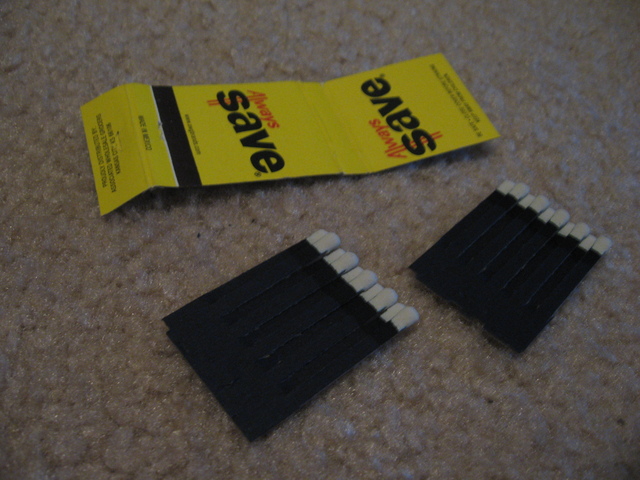
Take one of the sets of matches and roll it tightly, then tape the bottom to hold it tight.
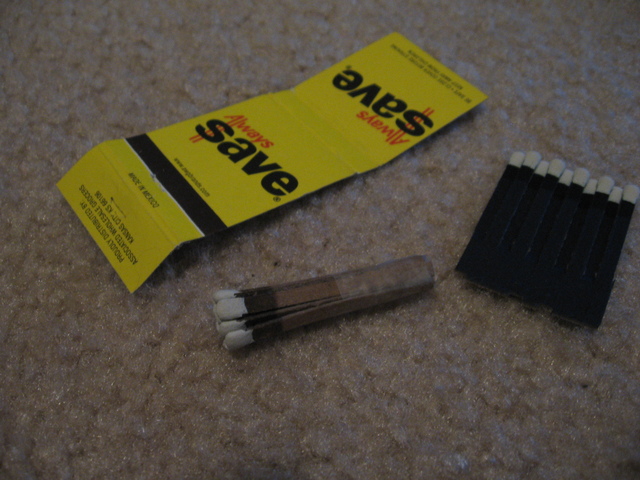
Carefully wrap the match book cover around the igniter tightly with the striker touching the igniter, but don't let the igniter rub on the striker or it will go off in your hand! Keep a bowl of water handy just in case.
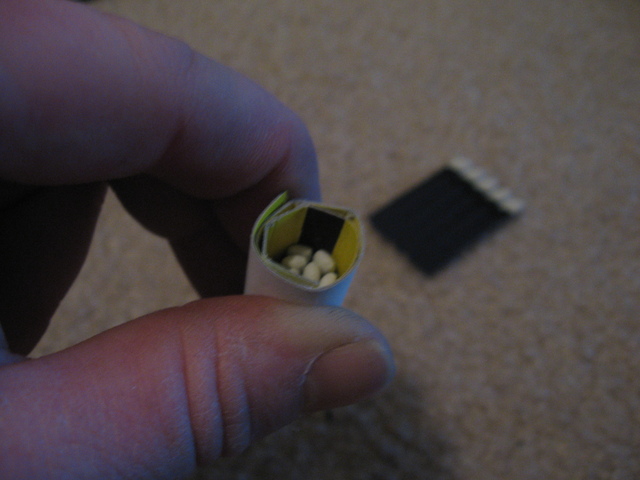
Wrap tape around the cover, and you have a pull igniter. Just yank the igniter out through the tube and you'll get a hot, brilliant flame. You can make a second igniter out of the other set of matches as well. The striker tube is re-usable.
Making a tripwire
Make a slip knot in fishing line or string and use it to bind the rolled matches. You really don't need to use tape for the rolled matches if you go about it this way. Leave a few feet of fishing line attached to the igniter, so that you can tie it around a sapling or another anchored object.
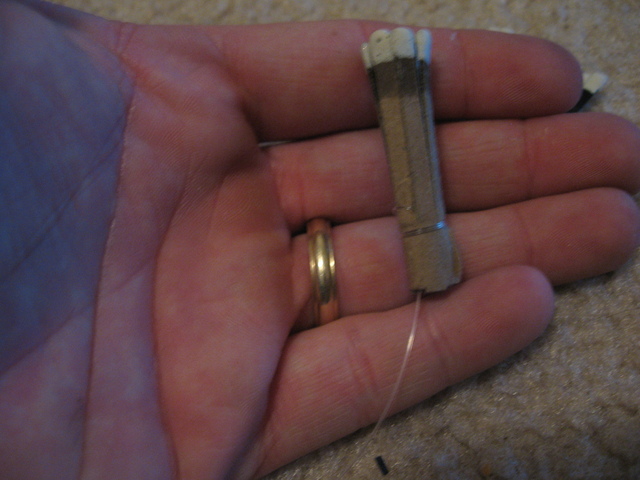
Take the striker tube and tie fishing line around it and tie it off. You will want a lot of fishing line to spare, because you will want to be able to string it across a fairly wide path if need be. I usually give it about 12 feet.
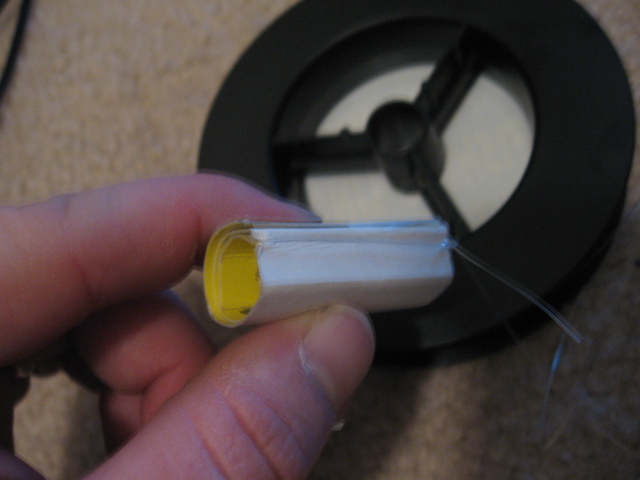
Assemble much like you put the last one together (that is, very carefully!). To set the trip wire, tie the igniter to a stationary object, then string the longer wire across a path. Jam a fuse deep into the striker tube with the igniter to activate a flare or other payload.
Waterproofing
Carefully melt some wax in an old tin can set in a pot of boiling water. Dip the igniter in wax a few times to coat it.
Transporting and storage
Wrap paper around the igniter before storing it in the striker tube to keep the igniter from going off in transit.
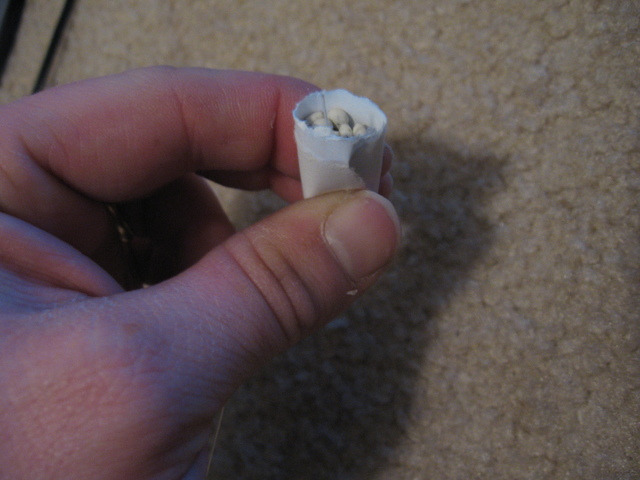
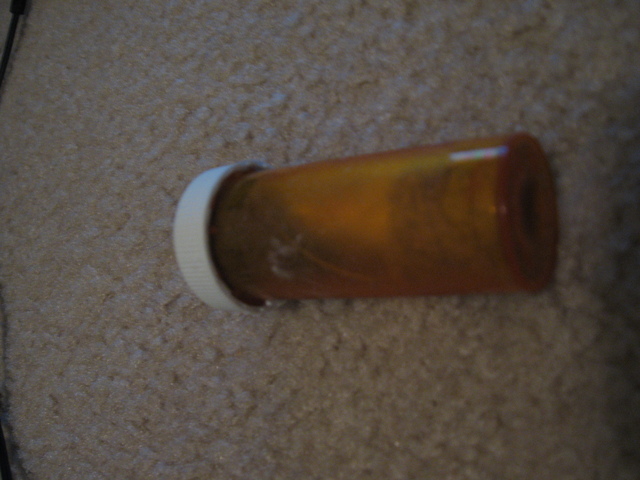
I recommend keeping these in a 35mm film canister or orange pharmacy pill bottle. Both of these are relatively water-tight. Add some old dryer lint for padding. Lint also ignites easily and makes good kindling for starting a larger fire when you're camping or backpacking.


 Posts
Posts


